
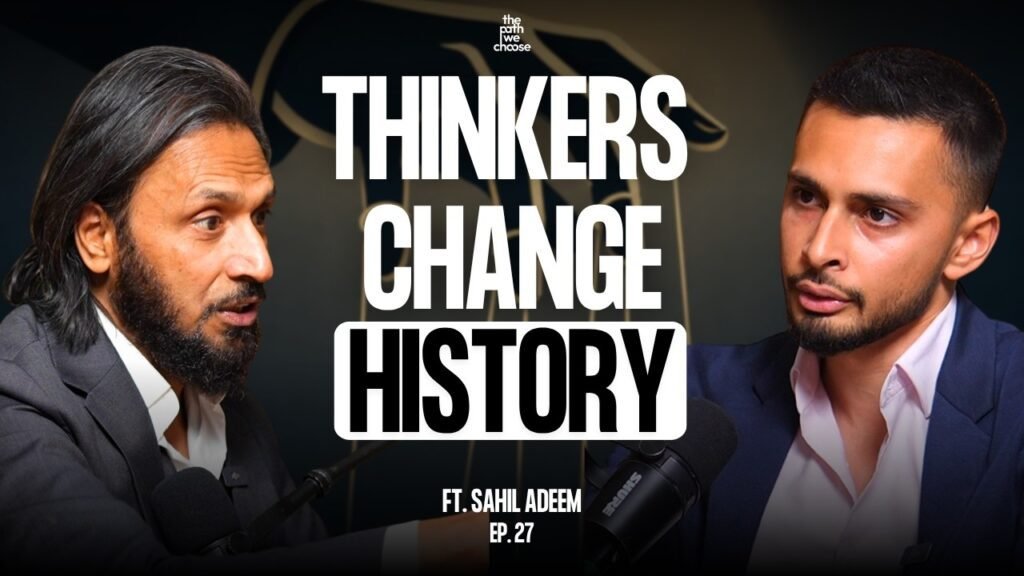
Ep. 27: The 1% Who Change Generations | Sahil Adeem
Hey everyone, Umer here!
What if the path is not something we choose, but something we are chosen for?
That was the tension at the heart of this conversation with Sahil Adeem. The discussion started with a simple question, but quickly moved into purpose, knowledge, power, the Quran, Muslim thought, and why most people never move beyond inherited ways of thinking.
“Nobody chooses a path. Allah chooses a path for you.”
Here’s what I learned.
Purpose Is Bigger Than Personal Success
Sahil challenged the idea that purpose is simply about creating jobs, helping people, or giving back. For him, those things matter, but they are not enough unless they are connected to a deeper divine direction.
“When you use the word God, the equation changes all together.”
That line reframed the whole conversation. If a person says their purpose is for Allah, then that purpose cannot only feed people materially. It must also serve their deeper needs, their direction, their faith, and their akhirah.
We Are All Messengers
One of the most powerful ideas was that everyone is already sending a message, whether they know it or not. Some people use cameras and microphones, others use conversation, work, family, or influence.
“Everybody is messaging. Everybody is a messenger.”
Sahil explained that the microphone is only an instrument. The real goal is to make the message travel far enough that other minds can pick it up, echo it, build on it, and create solutions beyond what one person could imagine alone.
Collective Thinking Creates Solutions
A major part of the conversation was about why people need to come together. Sahil explained that a single person may have limits, but when minds gather around the right knowledge, something much larger begins to form.
“When human brains come together, it’s a totally different brain.”
That idea stayed with me because it shifts the focus from individual brilliance to collective intelligence. A message is not complete when one person speaks it. It becomes powerful when enough people receive it, think through it, and start building from it.
Selfishness Cannot Build Selflessness
The conversation also went into why people struggle to work as a group. Sahil pointed to selfishness, survival, instant gratification, and the lack of a larger philosophy as reasons people remain trapped in individual thinking.
“Selfishness is not gonna yield selflessness.”
That line was direct, but important. Working on yourself is not selfish if it is done for a purpose beyond yourself. But if the purpose never moves past personal survival or personal achievement, then it never becomes something that can truly serve others.
The Prophetic Purpose
Sahil kept returning to the prophets as the real framework for purpose. He argued that we do not need to invent a new purpose statement when the Quran and prophetic history already give us the model.
“You just have to replicate it.”
For him, the purpose is not found by copying modern ambition. It is found by studying the mission of the prophets, understanding what they were trying to restore, and aligning our lives with that same direction.
Thinking Is Not Easy
One of the sharpest points in the episode was that most people do not truly think. They repeat, inherit, react, and reproduce ideas without understanding the depth behind them.
“It doesn’t take a smart man to think. It takes a lot of thinking to make a smart man.”
That line captures the difficulty of real thought. Sahil explained that thinking takes sacrifice. It takes energy. It takes the willingness to dismantle dreams, assumptions, and inherited ideas that may have shaped you since childhood.
Usul Comes From Allah and the Prophet
The conversation then moved into scholars, interpretation, and how Muslims often reproduce thought instead of producing it. Sahil made a clear distinction between usul and istidlal.
“Usul comes from the Quran and the Prophet Sallallahu Alaihi Wasallam.”
That distinction matters. The principles come from Allah and the Prophet. But the deductions people made in their own times were responses to their own problems. If Muslims today face different problems, they need to understand the principles deeply enough to apply them correctly now.
Competence Is Religious
When asked why competence is a religious responsibility, Sahil answered directly. Excellence is not just a professional trait. It is part of what the Quran demands.
“Ya Ahsanu Amala.”
For him, excellence applies to every craft. Business, science, engineering, art, leadership, and daily work all require competence. A Muslim should not accept carelessness as normal when the Quran calls people toward excellence.
Read If You Want To Lead
The strongest advice toward the end was about reading. Sahil said that most Muslims are not well-read, so they are forced to believe whatever others say without understanding the weight of those words.
“If you want to lead, you gotta read and learn how things are done.”
That may be the clearest takeaway from the entire conversation. If you do not understand the depth of the Quran, the gravity of ideas, and the way knowledge works, then you cannot lead people. You can only follow.
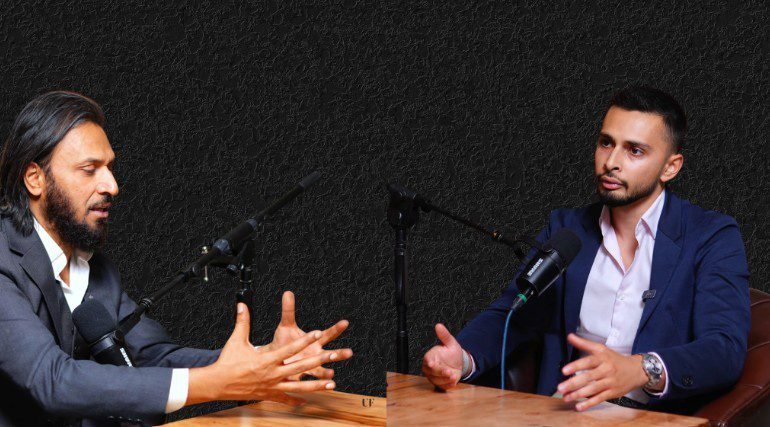
If this resonated with you, the full episode goes deeper into purpose, the Quran, Muslim thought, leadership, competence, prophetic history, and what it really means to stop reproducing ideas and start thinking from first principles.
Watch Full Episode
Thanks for tuning in. I hope this episode encourages you to live authentically and embrace your own path with resilience.
Best,
Umer Farooque
Host, The Path We Choose