You Can Have a Career Without Losing Your Priorities | Dr. Kanwal Kaisseri | Ep. 40
Hey everyone, Umer here!
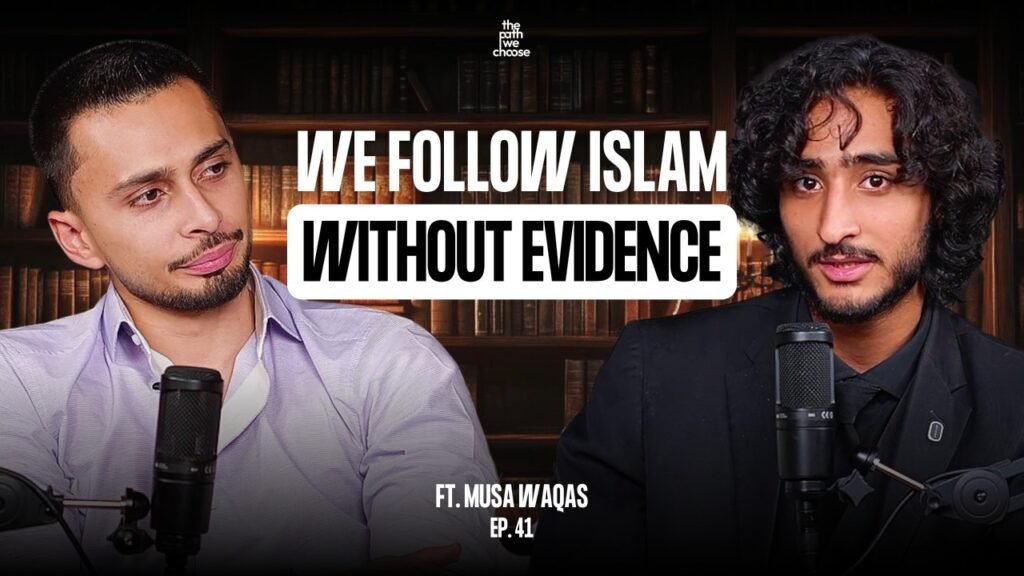
What if the path we think we chose was actually a responsibility we accepted before coming into this world? That was one of the ideas at the heart of this conversation with Musa, as we explored the straight path, how we form our beliefs, why people struggle to challenge what they have been taught, and what it really takes to live Islam beyond rituals.
The conversation went into courage, knowledge, wisdom, the Qur’an and Sunnah, relationships, dignity, and the difference between simply having information and actually understanding it.
“We are supposed to lead. We are supposed to be shepherds. But we’ve trained into this psychology that we are sheep.”
Here’s what I learned.

The Straight Path Requires Humility
Musa explained that he cannot claim with absolute certainty that he is personally on the straight path, even though the objective guidance of the Qur’an and Sunnah exists. For him, the responsibility is to keep returning to those sources and asking whether the path he is following actually aligns with them. musa transcript
That perspective requires humility. Instead of assuming that our interpretation is automatically correct, we have to be willing to read, listen, examine, and even admit that we may be wrong.
Your Beliefs Can Become Your Identity
One of the deeper discussions was about how people develop an identity around what their families, teachers, scholars, friends, and environments have taught them. Over time, they can become so attached to those beliefs that questioning them feels like questioning themselves. musa transcript
Musa described this as moving from our natural inner self into an identity shaped by society. The problem begins when we stop examining what we believe because admitting that we were wrong feels more painful than continuing to believe something we no longer understand.
Courage Means Being Willing To Be Wrong
Musa argued that one of the hardest things a person can do is say, “I was wrong.” It takes courage to challenge an idea you have held for years, especially when your family, community, or teachers have reinforced it.
“It takes so much courage and audacity to say that, yeah, I was wrong.”
That courage is not just useful for changing your own beliefs. Musa believes it is also necessary if we want to help other people think differently. You cannot genuinely debate an idea if neither person is willing to reconsider their own position. musa transcript
Sheep Psychology And Shepherd Psychology
Musa made a distinction between what he called sheep psychology and shepherd psychology. His argument was that people often become followers of their environment, school of thought, teacher, or society instead of developing the courage to examine ideas and lead themselves toward what they believe is correct.
He connected this to the prophets, describing them as people who stood apart from the crowd and led others toward what they believed was the truth. The challenge for us is to stop automatically following the crowd and develop the courage to think, question, and take responsibility for our beliefs. musa transcript
Fear Is Not Enough
The conversation then moved into what it takes to actually influence another person. Musa explained that two qualities should already exist within the person trying to teach: fear and fascination, while other qualities require conscious effort.
He explained that authority can create fear, but fear alone does not create lasting respect. The person also needs to be fascinating enough that others genuinely want to listen. Alongside those qualities, Musa emphasized three things that require conscious effort: language, relevance, and empathy. musa transcript
Speak Their Language
If you want to influence someone, you have to meet them where they are. Musa explained that this means understanding their language, grammar, slang, interests, and the things that are relevant to them.
“You have to be relevant.”
He also emphasized empathy. Whether you are speaking to a child, a young person, or an older person, you need to understand their perspective rather than simply forcing your own way of thinking onto them. The goal is not just to deliver information. It is to create enough common ground for the other person to actually listen. musa transcript
Iman Bil Ghayb Changes Everything
The conversation also explored why belief in the unseen is so important. Musa connected this to the Qur’anic concept of iman bil ghayb, explaining that Ibrahim عليه السلام and Musa عليه السلام acted with a level of trust that went beyond what they could physically see in front of them. musa transcript
That led to another distinction: people can have information without having knowledge, and knowledge without having wisdom. Knowing something intellectually is different from having the wisdom to understand its context, apply it correctly, and act upon it.
Qur’an And Sunnah Complete Each Other
A major part of the conversation focused on the relationship between the Qur’an and hadith. Musa argued that the Qur’an provides the broader framework while the Sunnah demonstrates how that guidance is lived and applied.
The example of salah made the point clearly. The Qur’an commands prayer, but the details of how Muslims perform the five daily prayers come through the example of the Prophet ﷺ. Without the Sunnah, the practical application of many Qur’anic commands would remain incomplete. musa transcript
Islam Is Not Deen Versus Dunya
The conversation also challenged the idea that deen and dunya are opposing sides of life. Musa argued that dunya is the planet we live on, while deen is the system through which we navigate it. The actual opposite of dunya is akhirah, not deen. musa transcript
That changes how we understand comfort, struggle, work, relationships, and success. The goal is not simply to make this life as comfortable as possible. It is to live in this world while remaining conscious of the life that comes after it.

If this resonated with you, the full episode goes deeper into the straight path, courage, identity, knowledge, wisdom, Qur’an and Sunnah, iman bil ghayb, relationships, dignity, and what it means to stop following the crowd and take responsibility for the path you choose.
Watch Full Episode
Thanks for tuning in. I hope this episode encourages you to live authentically and embrace your own path with resilience.
Best,
Umer Farooque
Host, The Path We Choose