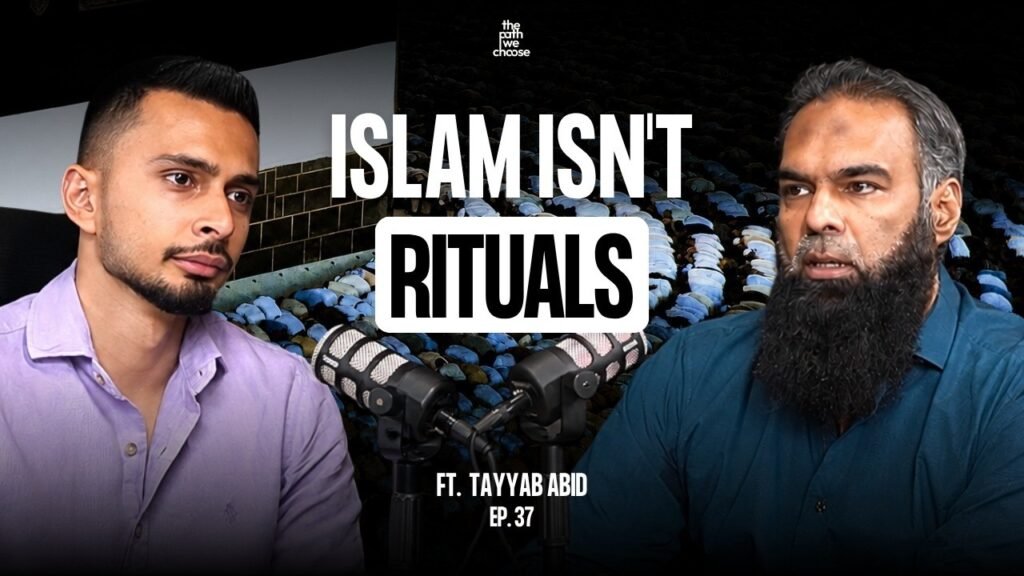
Being Muslim Means More | Tayyab Abid | Ep. 37
Hey everyone, Umer here!
A lot of us think change is supposed to start from the government, the system, or someone with more money, power, or influence.
But sometimes change starts with one person asking a very simple question:
What can I do with what I already have?
That was the heart of this conversation with Tayyab. The episode moved through business, failure, charity, clean water, social responsibility, Islam, accountability, character, Pakistan, and why one small action can create a ripple effect far beyond what we can see.
“When a Muslim has principles and values, he has to stand by them no matter what it takes.”
Here’s what I learned.
Principles Have To Cost Something
Early in the conversation, Tayyab shared a simple example: when he sits in someone’s car and music is playing, people who know him will often turn it off out of respect for the way he lives.
At first, that can sound extreme.
But the deeper point is not about forcing people. It is about living with enough consistency that people understand your values without you having to announce them every time.
A principle is not real until it costs you something. It may cost you comfort. It may cost you relationships. It may cost you the version of yourself that just wanted to fit in.
But if you believe something, you have to live like you believe it.
Luqma Started With A Real Problem
Tayyab spoke about seeing people ask for money again and again, and realizing that simply giving someone cash does not always solve the deeper issue.
So he began thinking differently.
Instead of only helping someone survive for the day, what if you could help them stand on their own feet?
That led to microfinancing, qard hasanah, and later support for women who could cook from home. They were trained, given setup costs, helped with menus, connected with offices, and supported until their work became a source of income.
That is the difference between charity that ends quickly and charity that restores dignity.
Help Should Match The Person
One of the strongest ideas in the conversation was that not every person needs the same kind of help.
A disabled person, an elderly person, a young person, a widow, a skilled woman, and someone who can work do not all need the same response.
Some people need direct support.
Some need a skill.
Some need capital.
Some need a system around them.
Real service requires understanding the person in front of you, not just giving the same answer to every problem.
Clean Water Is Not Just Water
The biggest part of the conversation was about clean water.
At first, an RO plant looks like a simple project. People need clean water, so you give them clean water.
But Tayyab explained that water represents much more than that.
It affects health. It affects school attendance. It affects medical costs. It affects women and children. It affects safety. It affects whether a child is carrying water for kilometers or sitting in a classroom.
When a basic need is missing, it does not create one problem. It creates a chain of problems.
One Girl Walking For Water Says Everything
One of the most powerful stories was about a young girl, around nine or ten years old, carrying heavy water containers from far away.
She was not in school because she was responsible for bringing water home.
That one image explains the whole issue.
A girl is not missing education because she lacks intelligence. She is missing education because the system around her has made survival her responsibility.
After the water plant was installed closer to the area, the number of girls in the nearby school increased.
That is the ripple effect.
Sometimes the education solution is not only a school. Sometimes it is water.
Poverty Is Often A System Of Connected Problems
The conversation made it clear that poverty is not one thing.
A family does not only lack money. They may lack water, electricity, transport, safety, medical access, education, and stable work.
If a child is drinking unsafe water, the family ends up in clinics. If the clinic is full of the same water-related cases, other medical issues get ignored. If girls have to walk far for water, they are exposed to harassment, dog bites, and danger. If parents feel unsafe, they may push early marriage as a form of protection.
One missing basic necessity can distort an entire life.
Social Responsibility Is Not Optional
A major question in the episode was whether helping society is really our responsibility, or whether it is only the government’s job.
Tayyab’s answer was clear.
As Muslims, we cannot outsource compassion.
Yes, governments have responsibilities. Systems should work. But that does not remove our responsibility to our neighbors, our communities, and the people around us.
If Islam is a complete way of life, then it has to shape how we deal with people, animals, servants, families, communities, and society.
Islam Is A Complete Way Of Life
The conversation kept returning to this idea: Islam is not only rituals.
It is not only prayer, fasting, umrah, and outward identity. Those things matter, but Islam also teaches character, justice, mercy, discipline, health, business ethics, social care, and how to treat people.
The Prophet ﷺ was not only a model in worship. He was a model as a husband, father, friend, leader, neighbor, and a source of mercy to people.
If we reduce Islam to rituals, we miss the parts of the deen that are supposed to transform society.
Accountability Changes Behavior
Another strong section was about why people behave differently abroad than they do in Pakistan.
The same person who refuses to stand in line in Karachi may suddenly follow every rule in Dubai, Canada, or the UK.
Why?
Because the environment has accountability.
Tayyab explained that people are shaped by four things: religious motivation, punishment, reward, and social identity.
If people are spiritually grounded, they avoid wrong because Allah is watching. If there is real punishment, they avoid wrong because there are consequences. If there is reward, they are encouraged toward good. If there is a strong identity, they say, “We are the kind of people who do not do this.”
A society needs all four.
Blame Is Easier Than Change
One of the most honest parts of the conversation was about how easily we blame everyone else.
The government is corrupt. The system is broken. Politicians are lying. Institutions are failing.
All of that may be true.
But the question remains: what are we doing?
If we throw trash on the road, cheat in business, waste time, mistreat people, ignore the poor, or only act when we get recognition, then we are not just victims of a broken system. We are helping keep it broken.
Change starts when a person stops asking only, “Who is responsible?” and starts asking, “What part of this is mine?”
Impact Matters More Than Numbers
Toward the end, the conversation moved into results, views, numbers, and validation.
Tayyab made a powerful point: if your goal is only results, you may quit when the numbers do not look impressive.
But impact is different.
If one person changes because of a conversation, that matters. If one family gets clean water, that matters. If one child goes back to school, that matters. If one person is inspired to take action, that matters.
Not every meaningful thing starts big.
Many of the best things start with one small, sincere action.
Direction Matters More Than Speed
Tayyab used a beautiful example: before the clock, there was the compass.
The clock tells you time.
The compass gives you direction.
A person can move fast, work hard, and stay busy, but if they have no direction, they may still end up nowhere.
For a Muslim, direction is not fame, money, applause, or numbers. Direction is whether this work pleases Allah.
If the direction is right, the results can be left to Allah.
Start Where You Are
The practical advice was simple.
Identify your domain. What are you good at? What do you care about? What problem keeps pulling at your heart?
Then start there.
You do not have to build your own organization. You can join someone already doing the work. You can volunteer. You can donate a portion of your income. You can support a water project. You can help with clothing drives. You can use your skills. You can show up consistently.
The point is not to do everything.
The point is to do something.
Lead By Example
The final takeaway was simple: lead by example.
It is easy to criticize Pakistan, criticize society, criticize the government, criticize religious people, criticize young people, and criticize everyone around us.
But the Muslim standard is higher than criticism.
We have to embody the change we want to see.
If we want clean streets, we stop littering. If we want honest businesses, we stop cheating. If we want better communities, we show up. If we want our identity as Muslims to mean something, we live with character, service, and responsibility.
Because being Muslim is not just something we say.
It is something people should feel when they deal with us.
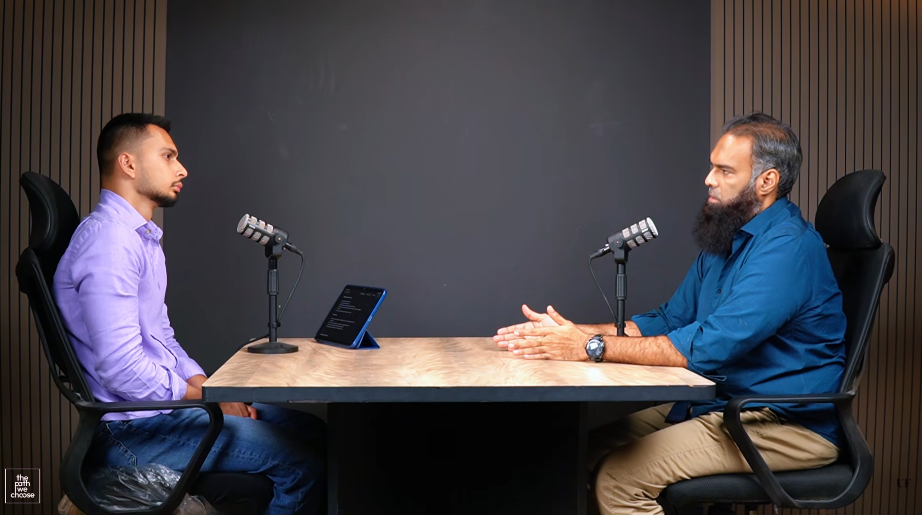
If this resonated with you, the full episode goes deeper into Luqma, clean water, microfinancing, social responsibility, accountability, Islam as a complete way of life, nationalism, character, and why real change begins with the person willing to take the first step.
Watch Full Episode
Thanks for tuning in. I hope this episode encourages you to live authentically and embrace your own path with resilience.
Best,
Umer Farooque
Host, The Path We Choose