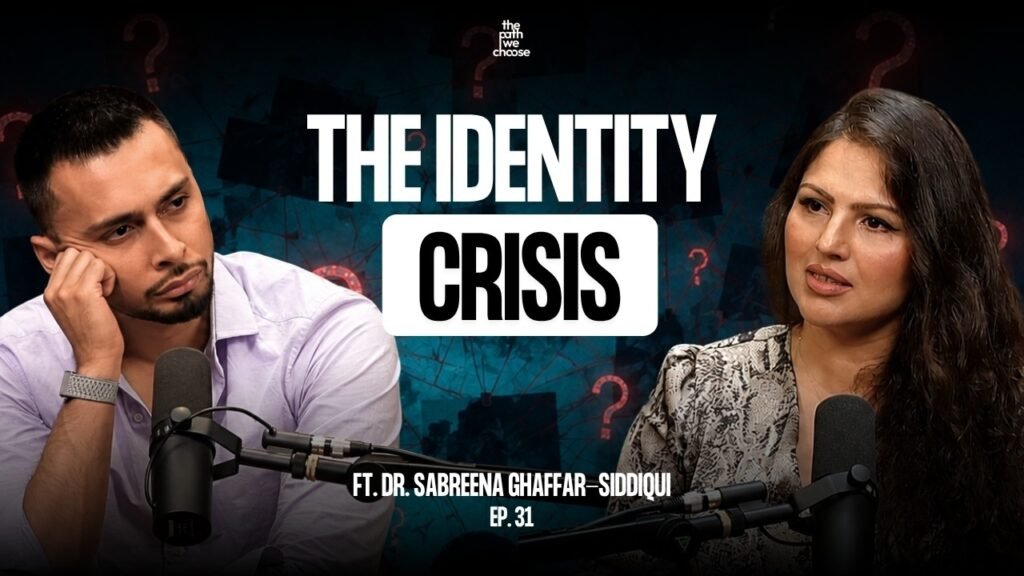
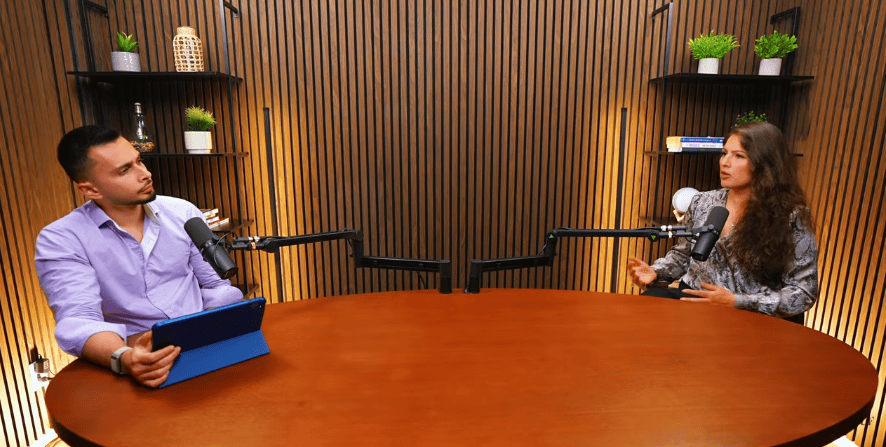
Who Controls You? | Dr. Sabreena Ghaffar | Ep. 31
Hey everyone, Umer here!
Identity is not as simple as where you were born, what passport you carry, or what people assume when they look at you. In this conversation with Dr. Sabreena, the discussion moved through identity, nationalism, racism, colonialism, Palestine, Pakistan, and what it really means to begin decolonizing the way we see ourselves and the world around us.
Identity Is Personal Before It Is Political
Dr. Sabrina started by explaining that identity only has meaning because of the person holding it. Other people may try to define you, categorize you, or reduce you to one label, but the real question is how you understand yourself.
“What matters is how you feel about your own identity.”
That idea matters because identity is not one flat thing. A person can be a mother, Muslim, Pakistani, British, Canadian, immigrant, student, professional, or something else entirely. But some identities carry more weight than others, and those become the ones we lead with.
Being Muslim Has To Be More Than Culture
One of the strongest distinctions in the conversation was between being Muslim as a cultural marker and being Muslim as a practiced faith. Someone can be born into a Muslim household and absorb Muslim culture, but that does not automatically mean Islam is the identity they actively live by.
“You could be born a Muslim, but you could not be a practicing Muslim.”
That line is important because it forces us to think beyond inherited labels. Islam is not only food, family customs, language, or community memory. It is something we choose to practice, learn, and attach ourselves to in a real way.
Where Are You From Is Not Always Simple
Dr. Sabrina also unpacked the question many racialized people hear all the time: where are you from? On the surface, it sounds harmless. But for many people, the question often means, “Why do you look different from what I think belongs here?”
“When someone says, ‘ Where are you from? ‘ it opens up this can of worms.”
That hit because the answer is rarely simple. A person may be born in one country, raised in another, have parents from somewhere else, and live somewhere completely different now. For white people, the question often means career or geography. For brown and black people, it often becomes a question about race, belonging, and whether they are really seen as part of the country they live in.
Nationalism Can Become Dangerous
The conversation then moved into nationalism, especially in the Pakistani context. Dr. Sabrina explained that national identity is not always harmless. It can become a tool that creates pride, fear, loyalty, and division at the same time.
“Nationalism has a very functional purpose.”
Her point was not that people cannot love where they come from. The issue is when national identity becomes so powerful that it starts replacing moral clarity. When the flag becomes more important than justice, truth, or the ummah, something has gone wrong.
Racism Often Starts As A Shortcut
Another powerful section was about stereotypes and how our brains use them as shortcuts. When we hear repeated ideas about a group of people, we may start applying those ideas automatically, even before we realize what we are doing.
“Your brain will shortcut with stereotypes to make sense of the world.”
That is how bias becomes normal. One person from a community does something wrong, and suddenly the whole community is blamed. Indians, Afghans, Somalis, Pakistanis, Arabs, black people, and so many others become reduced to one story. The danger is that we may think we are being logical, when really we are repeating what we were taught.
Colonialism Taught Us To Divide Ourselves
Dr. Sabrina connected much of this to colonialism and the way borders, categories, and divisions were created or hardened by colonial powers. Communities that once lived around each other became separated through maps, borders, national projects, and political conflict.
“Part of decolonizing my mind is going back to that indigenous way of being in community with other people.”
That line reframes decolonization. It is not just history. It is how we treat people today. It is how we think about borders, tribes, countries, skin colour, language, class, and who we believe is worthy of dignity.
Palestine Can Be The Red Pill Moment
Toward the end, Dr. Sabrina described Palestine as a moment where many people are forced to see the world differently. The systems we trusted, the media we believed, the governments we thought stood for justice, all of it begins to look different once the mask is removed.
“Palestine is the red pill moment.”
That is a powerful way to describe it. Some people choose the comfort of not knowing. Others choose the painful clarity of seeing the truth. Once you see how power operates, how language is manipulated, and how people are dehumanized, it becomes harder to go back to the old way of thinking.
Decolonizing Starts With Questioning Everything
The clearest practical advice from the episode was to start by questioning everything. Not in a reckless way, but in an honest way. Who taught me to see beauty this way? Who taught me to value light skin? Who taught me to see my own people as less? Who taught me what success looks like?
“Who taught me the insecurities that I have about myself?”
That question might be the beginning of real change. Dr. Sabrina gave examples of colourism, white mannequins in shop windows, beauty standards, and the way women especially are taught to measure themselves through standards they never created. Decolonizing the mind starts when we stop accepting every inherited belief as truth.
If this resonated with you, the full episode goes deeper into identity, nationalism, racism, Palestine, colonialism, colourism, stereotypes, and what it really means to break away from the ideas we were trained to accept.
If this resonated with you, the full episode goes deeper into purpose, struggle, marriage, Quran, Sunnah, sectarian differences, personal responsibility, and what it really means to build a life around Allah instead of simply following the world.
Watch Full Episode
Thanks for tuning in. I hope this episode encourages you to live authentically and embrace your own path with resilience.
Best,
Umer Farooque
Host, The Path We Choose